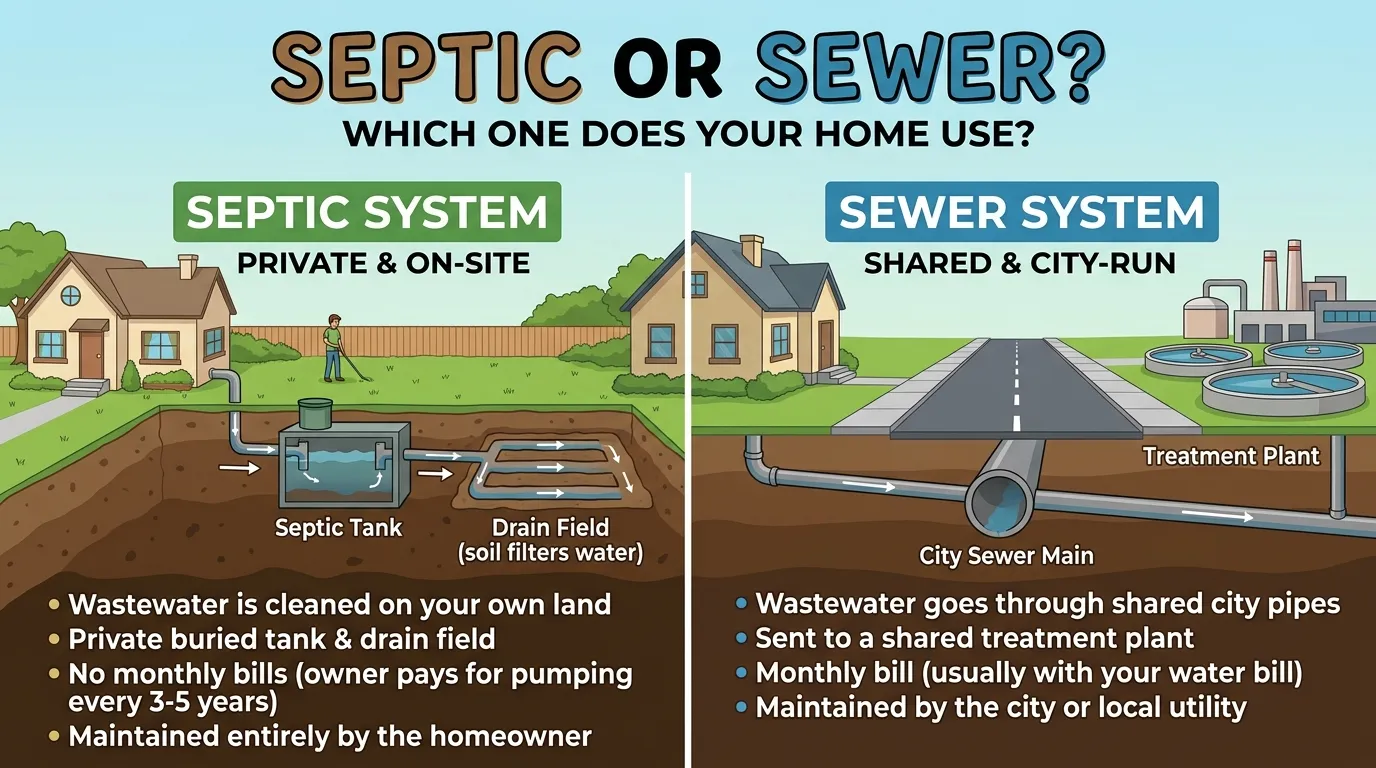
A septic system cleans wastewater right on your land. A sewer system sends wastewater away to a shared plant.
Dana and her husband were buying their first house. The listing said “septic system.” Dana paused. She grew up in a city. Every house there used the sewer. She never thought about where water goes after you flush. Was septic better or worse? She searched septic or sewer on her phone, right in the driveway.
A septic system is private. It cleans wastewater underground, in your own yard. A sewer system is shared. It carries wastewater through pipes to a treatment plant. The city or a local company runs this plant. People search septic or sewer because the choice affects cost and daily life. Many buyers face this question for the first time when they look at a new home. This guide makes the difference clear and simple.
Pronunciation
Both words are easy to say.
Septic
US: /ˈsɛp.tɪk/ (SEP-tik)
UK: /ˈsɛp.tɪk/ (SEP-tik)
Sewer
US: /ˈsuː.ɚ/ (SOO-er)
UK: /ˈsjuː.ə/ (SYOO-uh)
Note: “Sewer” here is not the same as a person who sews. This word rhymes with “truer.”
Difference Between Septic and Sewer
1. Basic Meaning
Septic means a private system on your land. Sewer means a shared system for many homes.
- Their home has a septic tank in the backyard.
- City homes connect to the sewer line under the street.
2. Where Waste Goes
Septic waste stays on your property. A tank holds it and cleans it there. Sewer waste travels far away. Pipes carry it to a big treatment plant.
- A septic tank holds and breaks down waste on-site.
- Sewer pipes carry waste miles away.
3. Who Takes Care of It
You take care of your own septic system. The city takes care of the sewer system.
- Homeowners must pump their own septic tank.
- Cities fix and manage the main sewer lines.
4. Cost
Septic systems cost more to install at first. But you pay no monthly bill, except for pumping once in a while. Sewer systems usually come with a monthly bill.
- A new septic system can cost thousands of dollars.
- A sewer bill often comes with your water bill each month.
5. Where You Find Them
Septic systems are common in the country and in some suburbs. Sewer systems are common in cities and busy towns.
- Homes far from town often use septic.
- Homes inside city limits often use sewer.
6. How Much Work It Takes
Septic systems need regular care from you. Sewer systems need little work from you, besides paying the bill.
- You should pump a septic tank every few years.
- A sewer hookup rarely needs your attention.
7. How It Helps the Environment
A septic system cleans water using soil and small bugs called bacteria, right on your land. A sewer system sends water to a big plant. That plant cleans water for many homes at once.
- Septic systems use soil to filter waste.
- Treatment plants clean water for whole neighborhoods.
8. What Can Go Wrong
A septic system can back up if you use it too much or forget to pump it. A sewer system can back up during big storms that flood the city pipes.
- A clogged septic tank can cause slow drains or bad smells.
- A sewer backup can affect many homes at once.
9. Word Type
Both words are mostly used as nouns.
- The septic tank needs pumping. (noun)
- The sewer line runs under the street. (noun)
10. The Swap Test
Ask, “Does my home have its own tank, or does it connect to the city?” If it has its own tank, think septic. If it connects to city pipes, think sewer.
- “My home has its own tank.” Think septic.
- “My home connects to city pipes.” Think sewer.
Before and After: Fix It Fast
- ❌ “All homes outside the city use sewer lines.”
✅ “Many homes outside the city use septic systems instead.”
Homes far from town often use septic, not sewer. - ❌ “A septic tank connects to the city plant.”
✅ “A septic tank cleans waste on your own land.”
Septic systems do not connect to a city plant. - ❌ “Sewer systems need no help from the homeowner.”
✅ “Sewer systems need little help, mostly just paying the bill.”
Homeowners still pay for sewer service. - ❌ “Septic tanks never need pumping if you are careful.”
✅ “Septic tanks need pumping every few years, even with care.”
Pumping is a normal part of septic care. - ❌ “You can switch from septic to sewer for free.”
✅ “Switching from septic to sewer often costs money and needs city approval.”
This kind of change usually costs money.
Read more about:https://verboix.com/theyre-or-their/
Nature and Behaviour of Septic and Sewer
Septic systems work quietly, under the ground. Wastewater flows from your home into a buried tank. Solid waste sinks to the bottom. Liquid flows out into the soil nearby, called a drain field. Tiny bacteria inside the tank help break down the waste. This system depends only on you for care. No city worker checks on it for you.
Sewer systems are part of a much bigger network. Wastewater from many homes flows into shared pipes. These pipes lead to a big treatment plant. The city or a local company runs the whole system. You simply connect your home and pay for the service. You never have to think about where the water goes next.
Why People Get Confused About Septic and Sewer
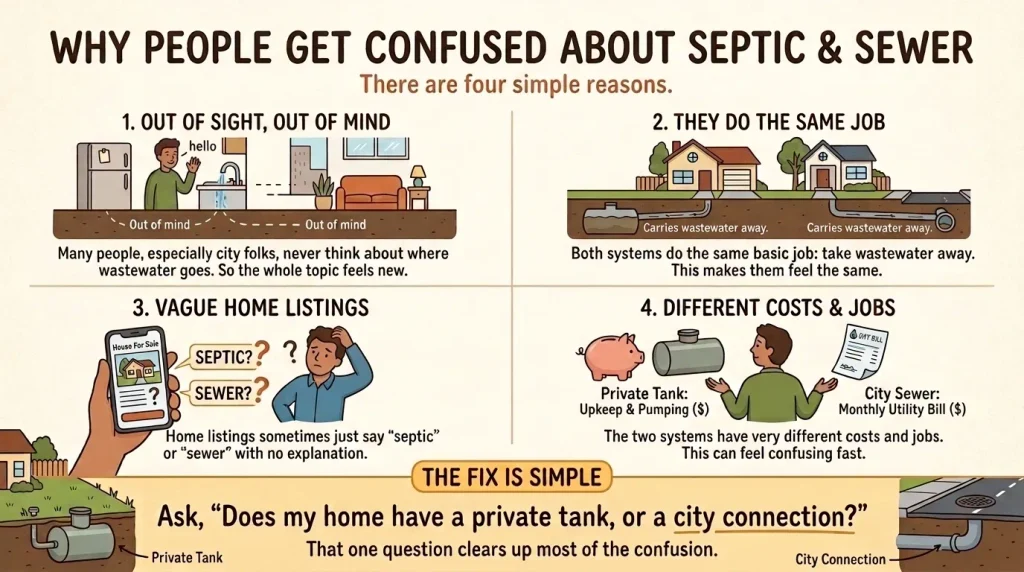
There are four simple reasons.
- Many people, especially city folks, never think about where wastewater goes. So the whole topic feels new.
- Both systems do the same basic job: take wastewater away. This makes them feel the same.
- Home listings sometimes just say “septic” or “sewer” with no explanation.
- The two systems have very different costs and jobs. This can feel confusing fast.
The fix is simple. Ask, “Does my home have a private tank, or a city connection?” That one question clears up most of the confusion.
Comparison Table
| Point | Septic | Sewer |
| Main meaning | Private, on-site cleaning | Shared, city-run cleaning |
| Who owns it | Homeowner | City or local company |
| Monthly bill | Usually none | Yes, usually |
| Cost at start | Higher | Lower |
| Common place | Country, some suburbs | Cities, busy towns |
| Who maintains it | Homeowner | City |
| Example | Septic tank in the backyard | Sewer line under the street |
| Similarity | Both remove wastewater from the home | Same |
The Origin of Septic and Sewer
The word “septic” comes from a Greek word, sēptikos. It means “able to cause decay.” This fits the way bacteria break down waste inside a septic tank over time.
The word “sewer” comes from old French and Latin words about moving water away. Sewer systems have existed since ancient times. Old cities, like Rome, built stone paths to carry wastewater away from homes.
Modern septic systems became common in the 1900s. They spread as homes grew in areas without city sewer lines. Modern sewer systems grew alongside cities, becoming a normal part of city planning worldwide.
British vs American English
The spelling is the same in both countries. Only small word habits differ.
- Spelling: “Septic” and “sewer” are spelled the same in the US and UK.
- Common terms: Americans often say “septic tank” and “sewer line.” Britons also use “drainage system” in daily talk.
- How it works: Both countries use similar septic and sewer systems, though rules can vary by area.
Examples:
- US: “Our new house has a septic system, so we will get it checked.”
- UK: “Our new house has a septic tank, so we will get it checked.”
Which One Should You Use?
This is not really your choice. Most homes already have one system, based on where they are.
- If buying a home: Ask if the home uses septic or sewer. Get an inspection either way.
- If building new: Check with local officials about what is available in your area.
- If unsure which your home has: Look for a tank cover in the yard, or call your local water office.
Common Mistakes
- ❌ “Septic systems are only for old homes.” ✅ “Septic systems are common in many new homes too, especially in the country.”
- ❌ “Sewer bills pay for septic tank pumping.” ✅ “Septic tank pumping is a separate cost you pay yourself.”
- ❌ “You can pour anything down a septic drain.” ✅ “Septic systems are sensitive to certain items and chemicals.”
- ❌ “All country homes must use septic.” ✅ “Most country homes use septic, but some areas have sewer access too.”
- ❌ “Septic and sewer cost the same over time.” ✅ “Septic costs more at first. Sewer has an ongoing monthly bill.”
Everyday Usage Examples
In emails
- “The home check found the septic tank needs pumping soon.”
- “Please confirm if the home is on septic or sewer first.”
On social media
- “Just had our septic tank pumped for the first time. Did not know it took this much care! 🏡”
- “So glad we have city sewer now. One less thing to worry about.”
In the news
- “The city is bringing sewer access to a growing area.”
- “Old septic systems are being replaced to protect local water.”
In formal writing
- “Homes outside city limits usually rely on private septic systems.”
- “The sewer report outlines planned fixes for the next ten years.”
Usage Trends
Septic systems stay common in the country and in many suburbs, especially where city pipes have not reached yet. Sewer systems are common in cities and busy towns, where it makes sense to connect every home to shared pipes.
As towns grow, some areas are adding sewer access to places that once used only septic. This change often leads to debate over cost and who pays for it. Home buyers now check this detail closely, since many home listings mention which system a house uses.
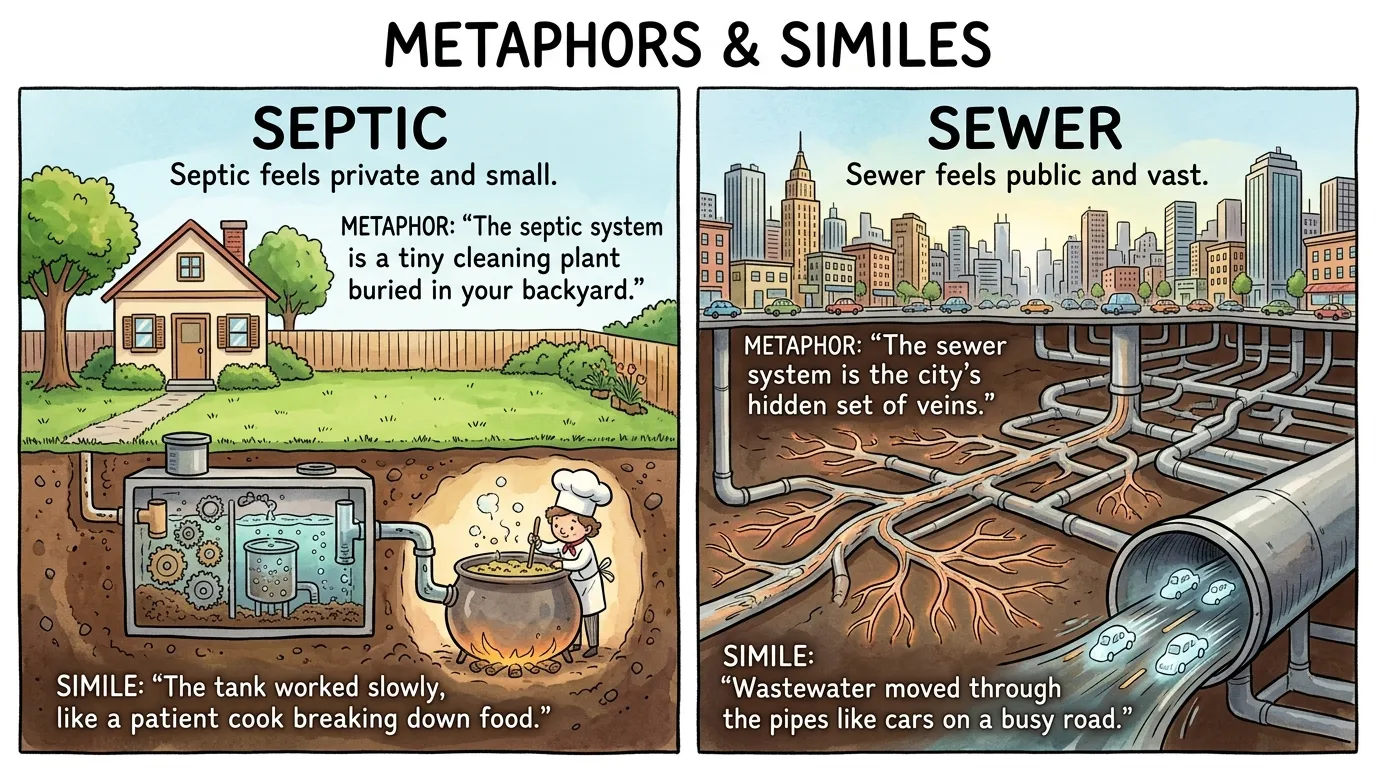
Metaphors and Similes
Septic
- “The septic system is a tiny cleaning plant buried in your backyard.” (metaphor)
- “The tank worked slowly, like a patient cook breaking down food.” (simile)
Sewer
- “The sewer system is the city’s hidden set of veins.” (metaphor)
- “Wastewater moved through the pipes like cars on a busy road.” (simile)
Septic feels private and small. Sewer feels shared and wide.
Connotative Meaning
Septic
- Positive: “Our septic system has worked great for years.” It shows trust.
- Neutral: “The septic tank sits near the back fence.” It states a fact.
- Negative: “The septic system backed up and smelled bad.” It shows a problem.
Sewer
- Positive: “City sewer means less work for us.” It shows ease.
- Neutral: “The sewer line runs under the main road.” It states a fact.
- Negative: “The old sewer pipes keep breaking downtown.” It shows a city problem.
Idioms and Proverbs
There are no famous idioms just for “septic” or “sewer.” But a few sayings fit the idea well.
- Out of sight, out of mind: Most people never think about either system until something breaks.
- An ounce of prevention is worth a pound of cure: This fits septic care well. Regular pumping stops bigger problems later.
- Down the drain: A common phrase for wasted money or effort.
Why This Difference Matters
Knowing whether a home has a septic or sewer system helps buyers plan monthly costs and check key details before buying. Homeowners can also avoid costly mistakes, such as pouring the wrong things down a septic system. For towns, well-managed septic and sewer systems help keep local water clean. A septic system that is not cared for can hurt nearby water. Adding new sewer lines can cost a town a lot of money too.
Usefulness in Daily Life
- When buying a home: Always ask if the home uses septic or sewer. Get it checked either way.
- When caring for a septic system: Pump it on a schedule. Do not flush wipes, grease, or harsh chemicals.
- When using sewer service: Expect a monthly bill. Report any backups to the city fast.
- When planting trees: Keep large trees away from a septic drain field. Roots can damage it.
- When planning a budget: Add septic care or sewer bills into your regular home costs.
A Quick Test You Can Use
Ask these three questions:
- Is there a tank cover in the yard? That means septic.
- Does the home get a sewer bill each month? That means sewer.
- Is the home far from the city, in the country? That often means septic.
Situational Preference
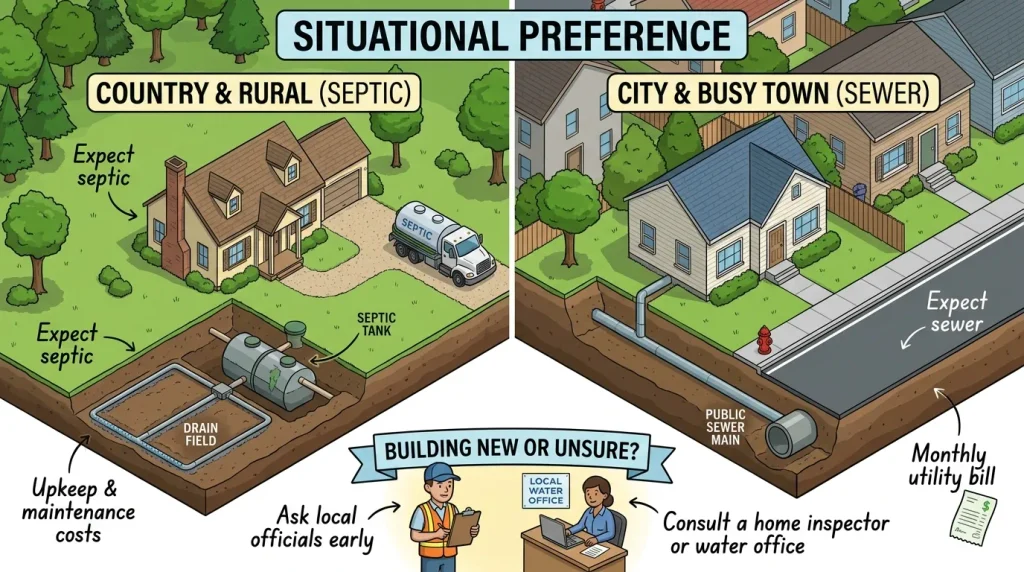
This is less about what you want and more about what your home already has. If you live in the country, expect septic. Plan for some upkeep costs. If you live in a city or busy town, expect sewer. Plan for a monthly bill. If you are building a new home, ask local officials early. This choice affects where you can build and how much it will cost. When unsure, a home inspector or local water office can tell you exactly what a home has.
Cheat Card
| Septic | Sewer | |
| Means | Private, on-site cleaning | Shared, city-run cleaning |
| Who cares for it | Homeowner | City |
| Monthly bill | Usually none | Yes |
| Common place | Country, suburbs | Cities |
| Remember | Your own tank in the yard | Shared pipes under the street |
Quick Answers
1. What is the difference between septic and sewer?
A septic system cleans wastewater on your own land, using a buried tank. A sewer system sends wastewater through shared city pipes to a treatment plant.
2. How often does a septic tank need pumping?
Most septic tanks need pumping every three to five years. This can change based on your home size and tank size.
3. Do sewer systems cost money each month?
Yes. Most sewer systems come with a monthly bill, often with your water bill.
4. Can I switch from septic to sewer?
In some places, yes. But it usually needs city approval and costs money.
5. Is septic or sewer better for nature?
Both can be safe when cared for well. A septic system that is not cared for can harm nearby water. Sewer plants are built to clean large amounts of water safely.
6. How do I know if my home has septic or sewer?
Check your home inspection papers. Look for a tank cover in the yard. Or call your local water office.
7. What can damage a septic system?
Flushing wipes, grease, or harsh chemicals can damage it. Using too much water at once can also cause problems.
Conclusion
Septic or Sewer? A septic system cleans wastewater on your own land using a buried tank and soil, while a sewer system carries wastewater through shared city pipes to a large treatment plant. Septic systems need more care from homeowners but usually have no monthly sewer bill. Sewer systems need less care from you but come with regular bills. Neither option is always better, as the right choice depends on where a home is located and which system it uses. When looking at a home or caring for your own, knowing the difference between septic and sewer helps you plan your budget, care for your home, and avoid costly surprises.