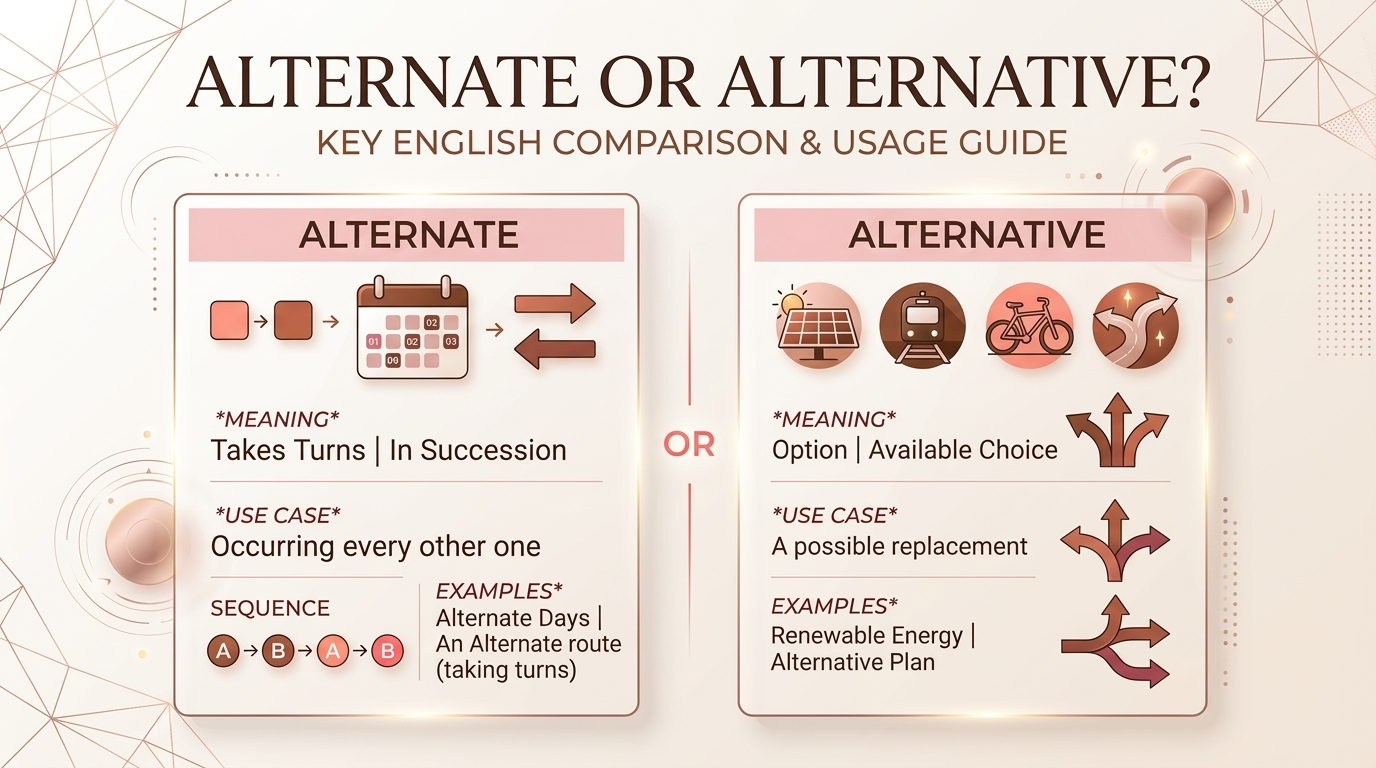
Alternate often means taking turns, every other, or a replacement. Alternative usually means another choice or option.
Have you ever stopped while writing and asked, “Should I use alternate or alternative?” Many English learners have this problem. The two words look very much alike. They also have some meanings that are close.
Imagine that your usual road is closed. You need another road to get to work. You may call it an alternate route because the new route replaces the one you cannot use.
Now imagine that your usual road is open, but it has too much traffic. You can still use it, but you want another road. That road can be called an alternative route because it gives you another choice.
There is another common use. If two people take turns, they may work on alternate days. If you have two or more choices, you have alternatives.
This is why alternate or alternative can be confusing. The words are related, but they do not always mean the same thing. American English also allows some overlap between them. Learning the main difference can help you choose the right word in your writing and speech.
Pronunciation of Alternate and Alternative
The word alternate has two common pronunciation patterns because it can be a verb, noun, or adjective.
As a verb, alternate is pronounced with the stress on the first part:
AL-ter-nate
Example:
We AL-ter-nate between two rooms.
As a noun or adjective, the ending sounds different:
AL-ter-nut
Example:
She is the AL-ter-nut player.
The word alternative is usually pronounced:
awl-TER-nuh-tiv
Example:
We need an alternative plan.
The exact sound can vary a little between US and UK English. The main point for learners is that alternate can change pronunciation when it changes its grammar role.
A Simple Way to Remember the Difference
Here is an easy test.
Think “take turns” → Alternate
The two workers alternate shifts.
They take turns.
Think “every other” → Alternate
We meet on alternate Fridays.
This means every other Friday.
Think “replacement” → Alternate
We need an alternate driver.
The person can replace another driver.
Think “another choice” → Alternative
We need an alternative plan.
This means another possible plan.
This simple rule works well in many sentences. But it is not a perfect rule for every English speaker. In American English, alternate can also mean another plan, method, or choice in some cases.
Difference Between Alternate or Alternative
1. Alternate Can Mean “Take Turns”
One main meaning of alternate is to take turns.
One thing happens. Then another thing happens. Then the first thing happens again.
For example:
The two children alternate carrying the bag.
The children take turns carrying it.
We alternate between morning and evening shifts.
The workers change shifts.
This meaning is about a repeated change.
2. Alternate Can Mean “Every Other”
Alternate can also mean one out of every two.
For example:
I visit my grandmother on alternate Sundays.
This means you visit her one Sunday, skip the next Sunday, and visit her again after that.
More examples:
The class meets on alternate Mondays.
She works on alternate weekends.
You can often use every other instead.
The class meets every other Monday.
Both sentences give the same basic idea.
3. Alternate Can Mean a Replacement
Alternate can describe a person or thing that can replace another.
For example:
Sara is the alternate player.
Sara can play if the main player cannot play.
Another example:
We need an alternate driver.
The alternate driver can take the driver’s place.
This meaning is common when a person or thing is ready to step in when needed.
4. Alternative Usually Means Another Choice
Alternative is strongly connected with choice.
You have one plan, but you can choose another plan.
For example:
We need an alternative plan.
The first plan may still be possible. You are simply looking at another choice.
More examples:
Is there an alternative way?
She found an alternative method.
We need an alternative to this system.
Here, alternative means another option or possibility.
5. Alternate Often Shows a Pattern
Look at this sentence:
The lights alternate between red and green.
The lights change from one color to the other.
There is no choice here.
The word shows a pattern.
More examples:
The teams alternate between two fields.
The colors alternate from blue to white.
In these examples, something keeps changing from one thing to another.
6. Alternative Can Mean Something Outside the Usual
Alternative has another meaning.
It can describe something that is different from the usual or traditional choice.
You may see phrases such as:
- alternative music
- alternative energy
- alternative lifestyle
In these phrases, alternative can suggest something outside the usual or mainstream choice.
7. Alternate Can Be a Verb
This is an important grammar point.
Alternate can be a verb.
We alternate between the two rooms.
The weather alternates between hot and cold.
But alternative is not normally used as a verb.
So this is correct:
We alternate between two plans.
This is not standard:
We alternative between two plans.
The verb is alternate.
8. Alternative Can Be a Noun
Alternative can be a noun.
When it is a noun, it means another choice or option.
For example:
We have two alternatives.
There is no alternative.
You can often understand it as another choice.
More examples:
This is our best alternative.
Do you have another alternative?
The exact meaning comes from the sentence.
9. The Road Test Makes the Difference Clear
A road example is a very easy way to understand these words.
Imagine your normal road is closed.
We need an alternate route.
The normal route cannot be used. The new route takes its place.
Now imagine that the normal road is open. It is just very busy.
We need an alternative route.
The normal route is still possible. You simply want another choice.
This replacement versus choice idea is a useful learning tool. It should not be treated as an absolute rule because real English has some overlap.
10. American English Has More Overlap
This is an important point for English learners.
In American English, alternate can sometimes be used where British English would use alternative.
For example:
We need an alternate plan.
This can mean:
We need another plan.
Cambridge notes that American English uses alternate for an alternate plan or method, while British English commonly uses alternative for this meaning.
So you should not think that alternate always means “replacement” and alternative always means “choice.”
The sentence and the variety of English both matter.
Learn more about:https://verboix.com/word-in-japanese/
Nature and Behaviour of Alternate and Alternative
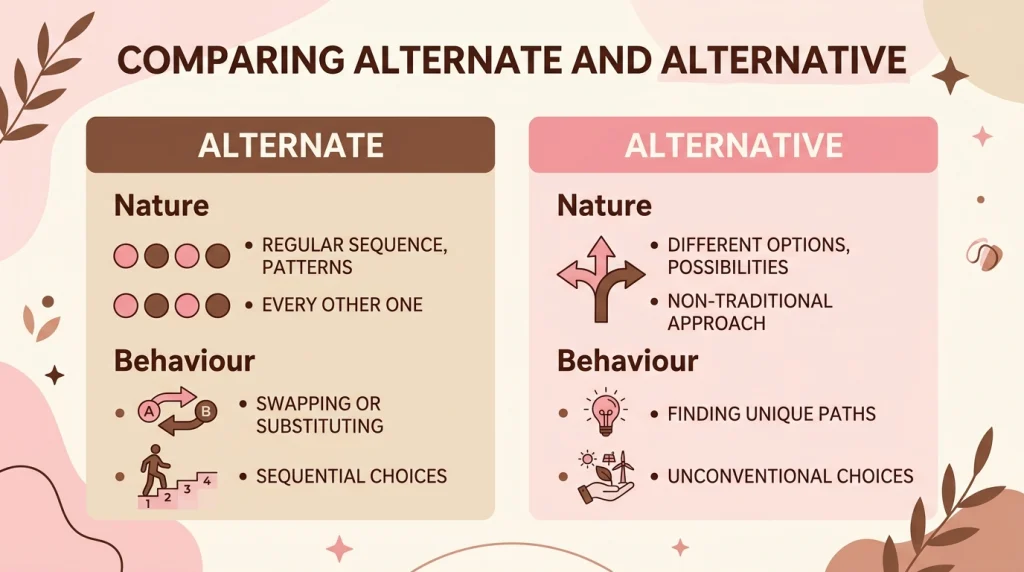
The two words have different main jobs.
Alternate often gives the idea of change, turns, switching, or replacement.
It can talk about:
- taking turns
- changing between two things
- every other one
- a substitute
- another plan in some US English uses
Alternative is more strongly linked with choice.
It can talk about:
- another option
- another plan
- another method
- another possibility
- something different from the usual
A simple way to think about them is:
Alternate often shows a change.
Alternative often gives another choice.
Why People Get Confused About Alternate or Alternative
There are several reasons these words cause problems.
First, they look almost the same.
Second, they come from the same word family.
Third, both words can be connected with the idea of something being different.
Fourth, alternate has more than one meaning.
It can mean:
- take turns
- every other
- a replacement
- another plan in some American English uses
Fifth, American and British English do not always use the words in exactly the same way.
This means that learners may see:
alternate plan
in one place and:
alternative plan
in another place.
Both can be understood, but the preferred use can depend on the type of English and the context.
Alternate vs. Alternative Comparison
| Alternate | Alternative |
| Often means taking turns | Usually means another choice |
| Can mean every other | Can mean another option |
| Can be a verb | Not normally a verb |
| Can be a noun | Can be a noun |
| Can be an adjective | Can be an adjective |
| Can mean a replacement | Can mean a different choice |
| Common in “alternate days” | Common in “alternative plan” |
| Often shows a change or pattern | Often shows a choice or possibility |
| Used in “alternate between” | Used in “alternative to” |
| Has some extra overlap in US English | Often clearer for “another choice” |
Origin of Alternate and Alternative
The two words have a shared history.
Both are linked to the Latin word alternus, which carries the idea of one after another or taking turns.
Over time, English developed different uses for the two words.
Alternate became strongly connected with changing between things, taking turns, every other, and serving as a substitute.
Alternative became strongly connected with another possibility or choice.
Their shared history helps explain why they still look and sound so similar today.
British vs. American English
British and American English can use these words in slightly different ways.
In British English, alternative is common when you mean another plan, method, or choice.
For example:
We need an alternative plan.
British English also uses alternate for meanings such as taking turns or every other.
We meet on alternate days.
In American English, there is more overlap.
You may see:
We need an alternate plan.
Here, alternate can mean another plan.
Cambridge specifically notes this US use and contrasts it with the British preference for alternative in this meaning.
So both forms may appear in English writing.
If you are writing for a wide international audience and simply mean “another choice,” alternative is often the clearest word.
Which One Should You Use?
Use alternate when you mean:
- take turns
- every other
- change between two things
- a replacement or substitute
Examples:
We alternate shifts.
I visit her on alternate Fridays.
We need an alternate driver.
Use alternative when you mean:
- another choice
- another option
- another method
- another possibility
- something outside the usual
Examples:
We need an alternative plan.
Do you have an alternative?
She found an alternative method.
There is no need to worry if you have seen alternate plan in American English. That use is accepted there.
Common Mistakes with Alternate and Alternative
Mistake 1: Using Alternative as a Verb
Incorrect:
We alternative between two plans.
Correct:
We alternate between two plans.
Alternate is the verb.
Mistake 2: Confusing “Every Other” With “Another Choice”
Look at these two sentences:
We meet on alternate Mondays.
We need an alternative meeting time.
The first sentence means every other Monday.
The second means another possible time.
They are not the same idea.
Mistake 3: Thinking the Words Are Always Interchangeable
Sometimes they overlap.
But look at:
We alternate between tea and coffee.
This describes a repeated pattern.
Now look at:
We need an alternative to coffee.
This describes another choice.
Changing the words would change the meaning.
Mistake 4: Forgetting the Noun Meaning of Alternate
John is the alternate.
This can mean John is ready to replace another person.
But:
John is an alternative.
usually means John is another possible choice.
The context makes the meaning clear.
Mistake 5: Mixing Up Alternately and Alternatively
These two words are also easy to confuse.
Alternately means in turns or one after another.
The lights flashed alternately.
Alternatively means another possibility.
Alternatively, we can stay home.
This is a small spelling difference, but the meanings are different.
Everyday Usage Examples
At Work
We alternate morning and evening shifts.
The workers take turns.
We need an alternative work plan.
The team needs another plan.
At School
The students attend the class on alternate days.
The class happens every other day.
The teacher gave us an alternative project.
The students have another project choice.
While Traveling
The main road is closed, so we need an alternate route.
The new route replaces the closed route.
The main road is open, but we want an alternative route.
The second route is another choice.
In an Email
We can meet on Monday. Alternatively, we can meet on Tuesday.
This gives the reader another choice.
In a News Story
The city opened an alternate road after the bridge closed.
The new road can replace the closed road.
The group suggested an alternative plan.
The group suggested another possible plan.
In Daily Conversation
Do you have an alternative?
This means:
Do you have another choice?
Alternate or Alternative in Real Situations
Real-life examples can make the difference even easier.
A Road Is Closed
Use:
alternate route
The normal route is not available.
A Road Is Open but Busy
Use:
alternative route
You still have the first route. You just want another choice.
Two Workers Share a Shift
Use:
alternate shifts
They take turns.
A Backup Worker Is Ready
Use:
alternate worker
That person can replace someone else.
You Have Three Plans
Use:
three alternatives
You have three possible choices.
A Team Changes Between Two Places
Use:
The team alternates between the two places.
The team moves from one place to the other in a pattern.
You Want Something Different From the Usual
Use:
alternative music
Here, the word can describe something outside the mainstream or usual style.
Usage Trends
Modern English does not always keep a strict line between these two words.
The biggest reason is regional use.
American English allows alternate in some places where British English more often uses alternative. This can happen with words such as plan and method.
At the same time, the main uses remain very clear.
You will still often see:
- alternate days
- alternate shifts
- alternate between
- alternative plan
- alternative method
- alternative choice
- alternative to
So English learners do not need to avoid either word.
Instead, learn the main meaning and look at the full sentence.
Metaphors and Similes
Alternate and alternative are mainly practical words. They are not famous for many fixed metaphors or similes.
Still, writers can use them in creative ways.
For example:
She chose an alternative path in life.
The word path may mean a real road, but it can also mean a life choice.
Another example:
He took an alternate road to success.
Here, the road may not be a real road. It can mean a different way of reaching a goal.
These examples work because the basic idea stays the same.
One word can show a different path or route. The other can show another possible choice.
Connotative Meaning
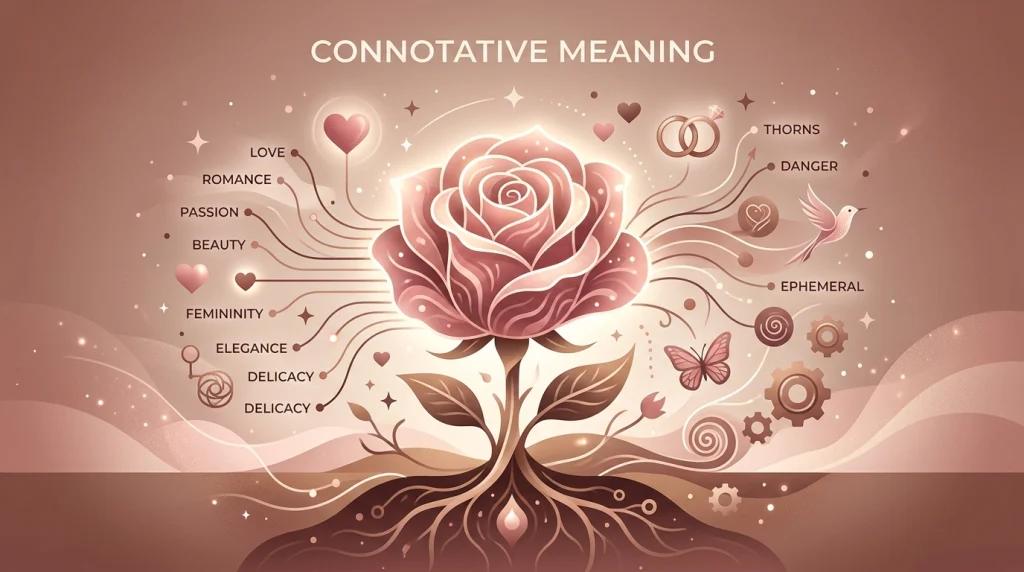
The two words can give a slightly different feeling.
Alternate can sound practical.
It often appears when the normal thing cannot be used.
We need an alternate route.
This sounds like a problem needs a new solution.
Alternative can sound more open.
It often suggests that there are different choices to think about.
We are looking for an alternative plan.
It sounds like the writer is considering another idea.
Alternative can also suggest something outside the usual style.
alternative music
alternative energy
This meaning gives the word a stronger sense of being different from the mainstream.
Idioms and Proverbs
There is no major English proverb that depends on the difference between alternate and alternative.
However, there are several useful expressions.
Alternate Between
This means to change from one thing to another.
I alternate between tea and coffee.
Alternative To
This means another choice instead of something.
We need an alternative to this method.
No Alternative
This means there is no other choice.
We had no alternative but to wait.
Alternatively
This introduces another possibility.
We can take the train. Alternatively, we can drive.
Alternatively is especially useful in formal writing because it clearly tells the reader that another choice is coming.
Literature and Movies
The ideas behind alternate and alternative appear often in books and films.
Writers use words such as alternate history, alternate world, and alternative path when they want to explore a different version of events.
For example, an alternate-history story may ask:
What if history had happened in another way?
Science fiction and fantasy often use this idea. A story may show a different timeline, another world, or another result of a past event.
The idea of an alternative path is also common in stories about life choices. A character may wonder what could have happened after making a different decision.
These ideas are useful because the two words connect to change and choice. The exact meaning still depends on the sentence.
Why This Difference Matters
The difference may look small, but clear word choice can make your writing stronger.
Imagine writing:
The company has three alternate plans.
A reader may understand this, especially in American English. But if you simply mean three possible choices, three alternative plans may be clearer for an international audience.
Now look at:
The two teams alternate every week.
If you change alternate to alternative, the sentence no longer has the same meaning.
Learning this difference can help you:
- write clearer emails
- write better school work
- understand news
- write better articles
- avoid common word mistakes
- understand US and UK English
- speak with more confidence
Usefulness in Daily Life
These words appear in many normal situations.
You may see an alternate route on a map.
You may work alternate shifts.
You may visit someone on alternate days.
You may need an alternative plan.
You may look for an alternative method.
You may write:
Alternatively, we can leave tomorrow.
The words are useful because daily life has both changes and choices.
When something changes or takes turns, alternate is often the word you need.
When you want another choice, alternative is often the better fit.
Situational Preference
When you write for a wide English-speaking audience, first think about your meaning.
If two things happen in turns, use alternate.
If something happens every other time, use alternate.
If one person or thing can replace another, alternate can be useful.
If you mean another option or choice, alternative is usually clear.
If you write in American English, remember that alternate can also mean another plan or method in some sentences.
When you are unsure, ask yourself:
Am I talking about a pattern or a choice?
If you mean a pattern, turn, or replacement, think about alternate.
If you mean another choice, think about alternative.
This simple question can help you make the right choice in many everyday sentences.
FAQs About Alternate or Alternative
Is Alternate or Alternative Correct?
Both are correct words.
The correct choice depends on what you mean.
Alternate often means taking turns, every other, or a replacement.
Alternative usually means another choice or option.
What Is the Easiest Way to Remember Alternate and Alternative?
Think:
Alternate = turns, every other, or replacement.
Alternative = another choice.
This is a useful guide, but remember that American English has some overlap.
Can Alternate and Alternative Mean the Same Thing?
Sometimes.
American English can use alternate for another plan or method.
For example:
We need an alternate plan.
Alternative plan can also be used.
But the words are not interchangeable in every sentence.
Is Alternate a Verb?
Yes.
We alternate between two teams.
Alternative is not normally used as a verb.
What Does Alternate Days Mean?
Alternate days means every other day.
For example:
I exercise on alternate days.
You exercise one day, skip the next, and exercise again after that.
What Does Alternative Mean?
Alternative usually means another choice, option, method, or possibility.
We need an alternative.
This means:
We need another choice.
Is Alternatively the Same as Alternately?
No.
Alternately means in turns or one after another.
Alternatively means as another choice or possibility.
For example:
The lights flashed alternately.
Alternatively, we can take the bus.
Conclusion
The difference between alternate or alternative becomes easier when you focus on the main idea. Alternate often means taking turns, every other, changing between things, or replacing someone or something. It can be a verb, noun, or adjective. Alternative usually means another choice, option, method, or possibility. For example, “We alternate between two shifts” shows a repeated change, while “We need an alternative plan” gives another choice. American English sometimes uses alternate to mean another plan or method, while British English more often uses alternative. So, when choosing between alternate or alternative, ask yourself: Are you talking about taking turns or giving another choice? This simple question can make the difference much easier to understand.







2 thoughts on “Alternate or Alternative: What’s the Real Difference?”